
.webp)
.webp)
.webp)
.webp)

A personal injury paralegal checklist template is the operational backbone for any modern PI firm. It's the standardized framework that guides a case from the chaos of intake all the way to a successful settlement. Think of it as your firm's quality control—a tool that ensures no critical step is overlooked, protecting both the client's interests and your firm's bottom line by stopping costly errors before they happen.
In the high-stakes world of personal injury law, a static, paper-based checklist just doesn't cut it anymore. It might feel like a good start, but it often becomes a source of administrative drag instead of a tool for genuine efficiency. A truly effective personal injury paralegal checklist template has to be a dynamic, living document that’s woven directly into your firm's daily workflows.
Without a structured system, it's terrifyingly easy for critical tasks to fall through the cracks. In an industry where motor vehicle accidents make up roughly 52% of all claims, paralegals are under constant pressure to keep dozens of files moving forward simultaneously.
A robust template ensures that vital intake steps—like gathering accident details, witness contacts, insurance information, and signed HIPAA authorizations—are completed right away. These initial actions can be the difference between a strong case and one that derails over a missed statute of limitations, which can be as short as two years in some jurisdictions. You can learn more about the crucial role of data in personal injury law statistics.
Let’s walk through a common scenario. A paralegal, juggling a heavy caseload, forgets to send a spoliation letter to the defendant’s insurance carrier after a major trucking accident. A few weeks go by. By the time anyone notices, crucial evidence like the truck’s black box data and the driver’s logs has been destroyed.
That single oversight has now severely weakened the client's case and torpedoed the potential settlement value. This isn't just a hypothetical problem; it's a daily risk for any firm still relying on manual processes and memory.
A checklist isn’t just about ticking boxes. It’s about building a repeatable, defensible process that protects your client, your attorney, and your firm from preventable errors. It transforms chaos into a predictable and profitable system.
A modern checklist template does more than list tasks; it drives action. It becomes the foundation for a standardized process that boosts both client outcomes and firm profitability. By creating consistency from one case to the next, you build a system that is:
This mindset shift—from seeing a checklist as a simple document to recognizing it as a powerful workflow—is the first step toward building a more resilient and successful practice.
Think of your master PI checklist not as a static document, but as a living framework that evolves with every case your firm handles. A truly effective template does more than just list tasks; it breaks down the entire lifecycle of a personal injury case into clear, actionable phases. This is how you build consistency, slash errors, and give your team a reliable roadmap from the first client call to the final settlement check.
The idea is to graduate from a simple to-do list to a strategic tool. Each phase should contain non-negotiable items that, once checked off, automatically trigger the next step. It’s about creating an unbroken chain of custody for every critical task.
This process flow gives you a bird's-eye view of how a typical case should move through your firm, starting with that initial contact and progressing all the way to resolution.
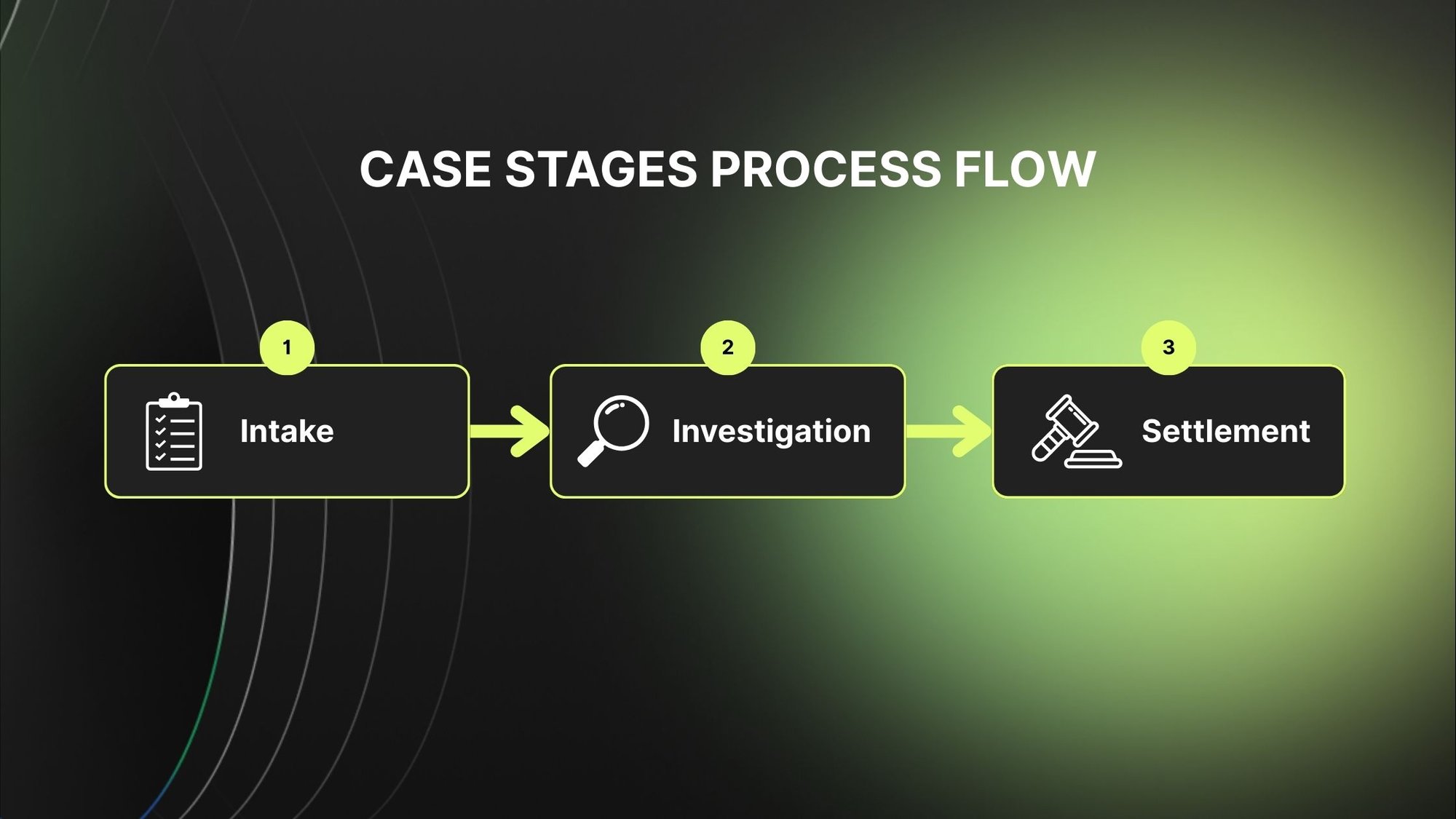
What this visual really drives home is that every stage builds on the one before it. A sloppy intake directly weakens your investigation, which in turn undermines the strength of your settlement negotiations. It’s all connected.
This is where it all begins. Any mistake made here can haunt the case for months or even years. Your onboarding checklist needs to be airtight to make sure you capture every critical piece of information right from the jump.
As soon as the client is officially signed, the clock starts ticking to preserve evidence. This phase is all about being proactive and moving fast to protect the integrity of your client’s claim.
A checklist for evidence gathering is non-negotiable. It ensures you send spoliation letters before crucial data is destroyed and request police reports before memories fade. This stage sets the tone for the entire negotiation.
Here are a few must-have items for this part of your checklist:
Let’s be honest—managing medical records is often the biggest time-suck in a PI case. A well-organized checklist here is your best defense against delays. It ensures you’re building a complete picture of your client's damages. This is also where a solid medical chronology template becomes your best friend.
Your checklist should include:
This is the grand finale, where all your painstaking work comes together. The demand package isn't just a collection of documents; it's a compelling narrative backed by irrefutable proof, all designed to persuade an insurance adjuster.
Let's be honest, the classic personal injury paralegal checklist template—whether it's a printed sheet, a Word doc, or a shared spreadsheet—is an absolute necessity. It gives our work structure and helps us avoid those nightmare scenarios where a key deadline gets missed. But here's the catch: these static checklists are passive. They tell you what to do, but they can't actually help you do it.
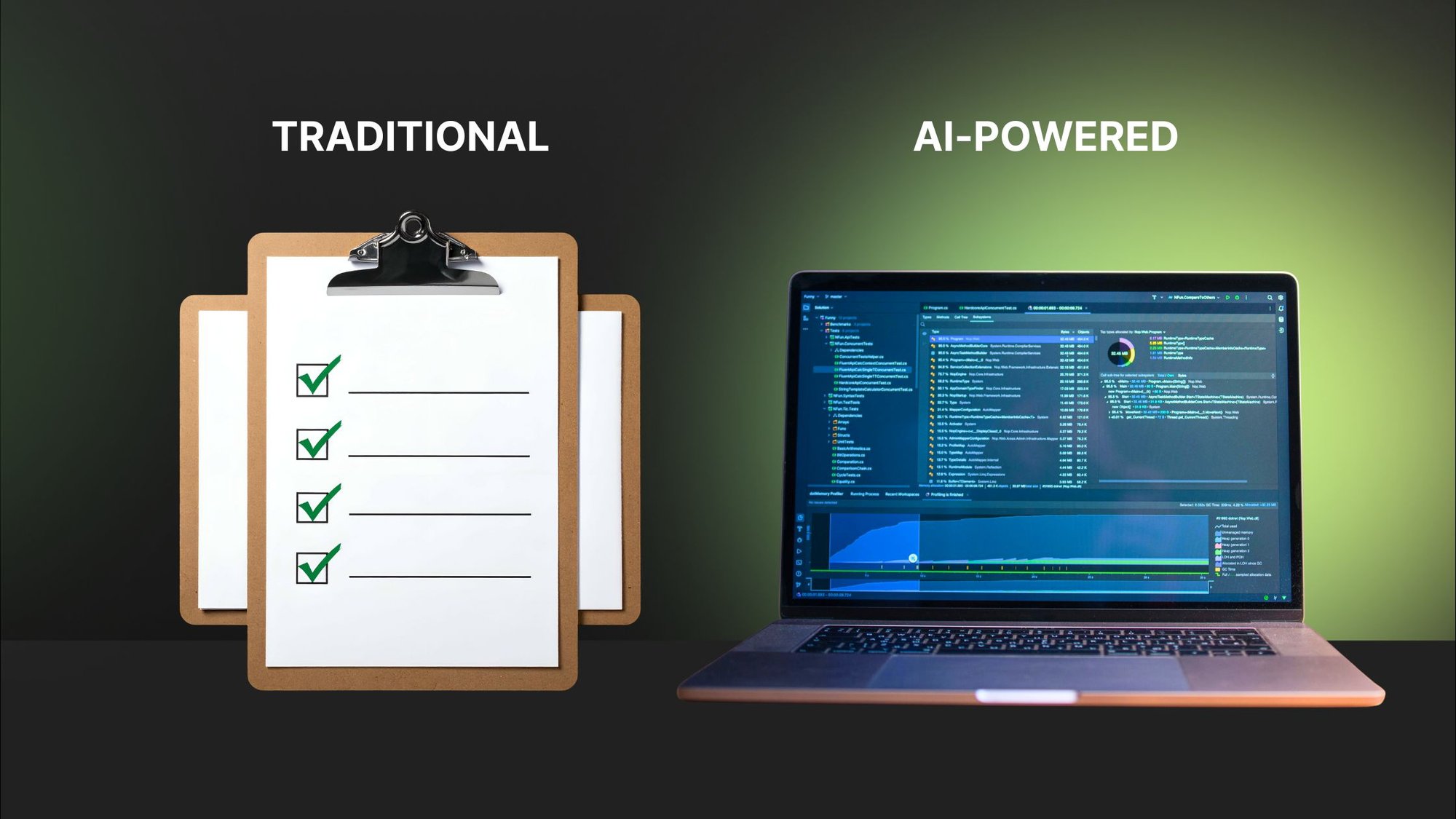
This is where you see the massive gap between a manual process and an AI-powered workflow.
Manual checklists, as useful as they are, often become administrative bottlenecks. They trap paralegals in a reactive cycle of chasing down information, manually updating files, and just trying to keep up. An agentic AI system like ProPlaintiff.ai completely flips that script. It turns the checklist from a simple to-do list into the living, breathing heart of your case management.
Think about a standard checklist item: "Summarize medical records." In a traditional firm, this is a multi-hour slog. It means a paralegal has to painstakingly read through hundreds of pages of dense medical jargon, trying to piece together a coherent timeline.
With an agentic AI, that checklist item becomes a trigger.
Instead of just reminding you about the task, ProPlaintiff.ai’s AI Paralegal gets to work. It reads the records, spits out an accurate chronology, and automatically flags the important medical details. The paralegal’s job instantly shifts from tedious data entry to high-level review and strategic thinking.
While great legal document automation software can populate templates, agentic AI takes it a huge step further. It doesn't just fill in blanks; it actually understands and summarizes the content inside those documents.
To really see the difference, you have to look at the time, cost, and accuracy of day-to-day tasks. The table below breaks down just how stark the contrast is when you compare a traditional paralegal's workflow with one supercharged by ProPlaintiff.ai.
The numbers speak for themselves. The gains aren't just incremental; they represent a fundamental change in how a firm can operate.
The real win here isn't just about speed; it's about shifting your team's entire focus. A traditional checklist keeps a paralegal tied to administrative work. An AI-powered workflow frees them up to concentrate on case strategy, client communication, and preparing for tough negotiations.
An AI paralegal doesn't replace a human paralegal; it supercharges them. It automates the monotonous tasks that consume up to 40% of a paralegal's day, allowing them to operate at the top of their license.
This approach turns your checklist into the central nervous system of your practice, where every item is connected to an automated action. It’s an integrated system that ensures nothing falls through the cracks and your firm is always moving forward, proactively managing cases instead of just reacting to them.
If you want to see how this works in the real world, check out our guide on how to leverage an AI paralegal for the biggest impact.
Navigating the world of legal tech can feel like a full-time job in itself. With so many options popping up, it’s tough to tell what’s genuinely useful versus what’s just hype. But getting this choice right is about more than just efficiency—it's about building a real competitive edge for your firm.
A static personal injury paralegal checklist template is a great starting point, but it's technology that breathes life into it. The problem is, not all tech is created equal. General AI tools like ChatGPT are everywhere, but for a law firm, they're a minefield of risk. They simply weren't built for legal work and have zero of the necessary security or compliance for handling protected health information (PHI).
When you feed sensitive client data into a non-specialized tool, you're opening your firm up to massive ethical and legal liabilities. It's why ensuring any vendor meets strict security standards, like those offered by HIPAA compliant transcription services, is non-negotiable. Your clients and your practice depend on it.
The difference between a general-purpose AI and one built specifically for the law is night and day. Sure, ChatGPT can draft a generic-sounding letter. But it has absolutely no understanding of legal nuance, jurisdictional rules, or the strategic thinking that goes into building a personal injury claim. It’s an impressive language machine, but it is not a paralegal.
ProPlaintiff.ai, on the other hand, was trained on PI case data from day one. It gets the context behind a medical record, sees the importance of a key detail in a police report, and knows how to structure a truly persuasive demand letter.
Using a generic AI for legal work is like asking a general contractor to perform brain surgery. They might know the basic terminology, but they lack the specialized training to get it right—and the consequences of a mistake are catastrophic.
To make a smart decision, you need to see a clear comparison. Traditional case management software is fantastic for organization, while an agentic AI like ProPlaintiff.ai excels at execution. Many modern firms use both, but knowing what each tool does best is the key to a powerful tech stack. If you're looking at case management systems, our guide to the best case management software for attorneys is a great place to start.
So, how do the different options really stack up when it comes to the core tasks a PI paralegal handles every day? Let's break it down.
This table cuts through the marketing noise to show you what each type of platform actually does for the essential work your team handles daily. To conduct your own comparison, analyze how each platform handles a core paralegal task, such as creating a medical chronology. Time how long it takes manually, with your current software, and then compare that to a demo with ProPlaintiff.ai. Ask vendors for specific, quantifiable data on time savings for tasks like demand package creation.
Ultimately, what do you need your technology to achieve? Are you looking for a better digital filing cabinet, or do you need an active assistant that actually completes the tasks on your checklist?
ProPlaintiff.ai was built for the second one. It's designed to shift your workflow from passively tracking tasks to actively getting them done with AI-driven execution.
A static personal injury paralegal checklist template is a reliable map, but what if you had a GPS that did most of the driving for you? That’s the difference when you bring in ProPlaintiff.ai. Our platform doesn’t just help you manage your checklist; it actively helps you complete it.
Let's look at how this plays out in a real-world motor vehicle accident case.

Imagine your checklist has an item: 'Draft Initial Demand Letter.' Traditionally, that means blocking out a few hours. You’d have to manually pull facts from the police report, piece together the treatment narrative from a mountain of medical records, and then start calculating damages. It's a grind.
With ProPlaintiff.ai, this checklist item becomes an action trigger, not just a reminder.
Instead of just nudging you to draft the letter, our agentic AI gets the work done. With a single click, the AI Paralegal dives into the entire case file—the intake forms, police reports, and medical records you’ve already uploaded. Within minutes, it generates a comprehensive, data-driven first draft of the demand letter.
The platform gets the context. It identifies the treating physicians, pulls specific injury diagnoses directly from medical summaries, and builds a compelling argument based on the facts already in the file.
Your role instantly shifts from tedious data entry to high-level strategic review. The AI handles the 80% of foundational drafting, freeing you up to spend your time refining legal arguments and perfecting the narrative.
Every feature inside ProPlaintiff.ai is designed to knock out a specific task on your checklist. This direct connection transforms your workflow from a long series of manual steps into a smart, semi-automated process.
Here’s a practical look at how our features tackle common checklist items, turning hours of work into minutes.
This isn't just about saving time. It’s about reallocating your team's most valuable asset—their expertise—to where it matters most: strategic work and meaningful client interaction, not administrative drag.
Bringing new tech into a law firm always sparks a few questions, especially in a field like personal injury where precision is everything. Most paralegals and attorneys I talk to are curious about how AI actually fits into their day-to-day work, which is often built around a trusted personal injury paralegal checklist template.
Here are some straight answers to the most common concerns I hear.
This is always the first—and most important—question. The answer is a hard yes, but with a huge caveat: you have to choose a platform built specifically for the legal industry.
General-purpose AI tools are absolutely not secure enough for confidential client information. That's a huge risk. But a system like ProPlaintiff.ai is entirely different. It’s built with bank-grade security and is fully HIPAA compliant. All your data is encrypted and kept inside a closed system designed from the ground up to meet the legal world's strict confidentiality rules. It’s all about protecting your firm and your clients.
Not a chance. In fact, it’s the opposite. The whole point of agentic AI is to make paralegals more powerful, not obsolete.
Think about it. AI automates the soul-crushing, repetitive tasks that eat up your day—like summarizing a thousand pages of dense medical records or drafting the first version of a standard document. This frees you up to focus on the work that actually wins cases: deep case analysis, meaningful client communication, and final legal review. The AI acts like a super-efficient assistant, handling the administrative grind so you don't have to.
AI isn't here to take your job; it's here to take the boring parts of your job. Instead of spending hours on data entry, you can spend that time on the strategic thinking that makes a real difference.
We designed the integration process to be fast and painless. You can get your firm’s existing checklists and workflows up and running on our platform in a matter of days, not months.
The system is intuitive, so you can easily map your current processes to AI-powered actions without disrupting your caseload. This isn't about throwing out your trusted system and starting over from scratch. It's about making the system you already have work smarter and faster for you.
Ready to see how an agentic AI can execute the tasks on your checklist, not just help you manage them? ProPlaintiff.ai turns your workflow from a static to-do list into an active, case-winning machine. Come see the difference at https://www.proplaintiff.ai.




.svg)