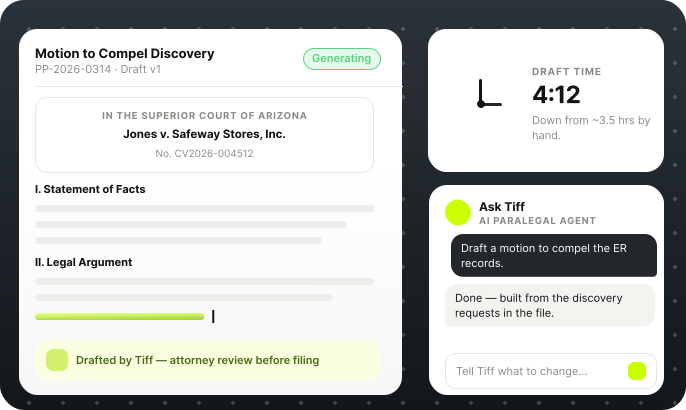
Draft accurate, court-ready pleadings faster with AI-powered tools built for plaintiff law firms.
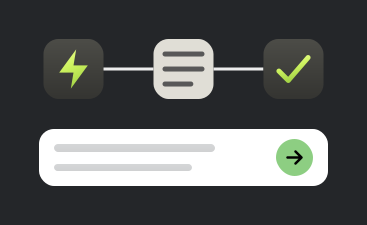
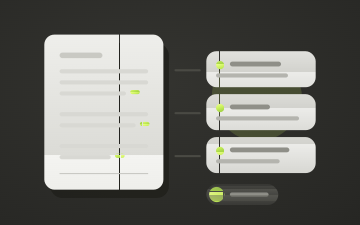
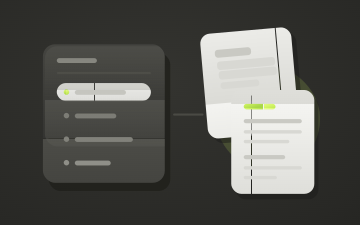



How It Works
Everything you need to know about Pleadings on ProPlaintiff.
ProPlaintiff's Pleadings tool helps law firms draft court-facing litigation documents using case information, uploaded case files, and firm-approved templates. Common examples include complaints, amended complaints, motions, oppositions, replies, declarations, notices, stipulations, and proposed orders.
Generally, yes. The Pleadings tool is best suited for documents that are intended for court filing or litigation use, such as motions, complaints, responses, and proposed orders.For documents that are not filed with the court, such as letters of representation, lien reduction letters, or client authorizations, ProPlaintiff offers better workflows through template-based document generation.
Yes, depending on your firm's workflow and available templates. Interrogatories, requests for production, requests for admission, and discovery responses are not always considered "pleadings" in the strict legal sense, but they are litigation documents that many firms draft alongside court filings.If your organization has discovery templates available in ProPlaintiff, the platform can help generate discovery documents using relevant case facts and source materials.
Yes. Once a pleading or litigation document is finalized, it can typically be saved or exported to the appropriate case file so your team can keep a complete record of drafts, final versions, and supporting materials.Keeping pleadings in the case file helps ensure that attorneys and staff can easily find the document later for filing, service, review, or reference.
No. ProPlaintiff is designed to assist legal professionals with drafting, organization, and workflow efficiency. Attorney review remains essential.




.png)
.png)
.png)