.webp)
.webp)
.webp)
.webp)


If you haven't logged into ProPlaintiff recently, now is the time.
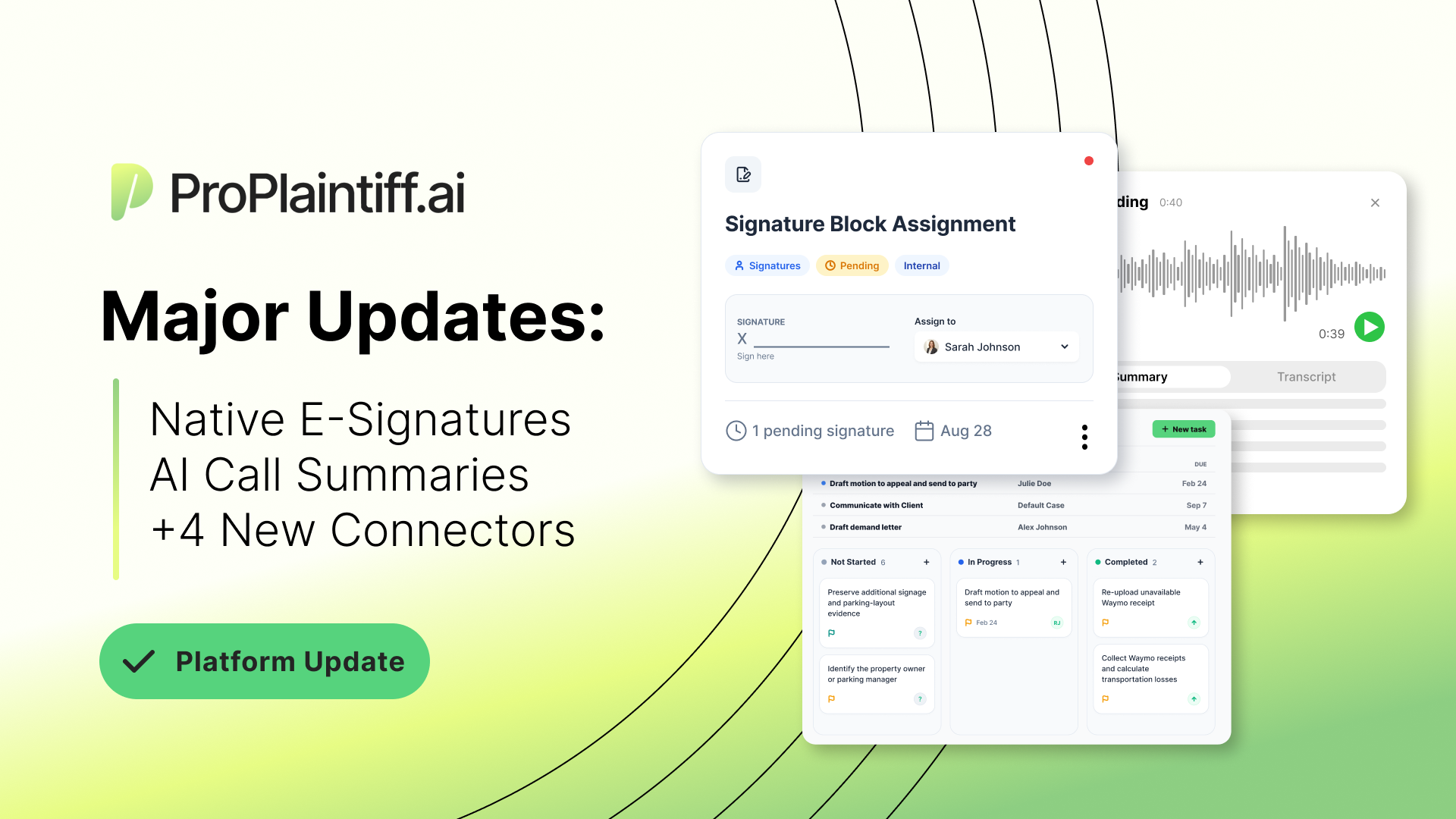
We just shipped the most significant platform update in ProPlaintiff's history, and it touches nearly every stage of the plaintiff litigation workflow. Whether you're opening a new case, building a medical chronology, drafting a demand letter, or managing your team's calendar, there's something new and meaningfully better waiting for you.
This post walks through every major update, what it does, and why it matters for your practice.

The centerpiece of this update is the AI Paralegal, and it has been completely rebuilt.
Where the previous AI Paralegal handled document-related queries, the new version functions as a full case operations hub. It now has access to your case files, case documents, calendar, and calendar events, so it can act with real context rather than working in isolation.
Here's what you can do directly from the AI Paralegal chat:
Create a case from scratch. No more navigating through menus. Tell the AI Paralegal to open a new case, and it handles the setup. Use @mentions to add attorneys or team members to the case without leaving the chat.
Generate legal documents on demand. Ask the AI Paralegal to produce a demand letter, medical chronology, or pleading, and it draws from the documents and data already on the case to produce a draft. Files can be uploaded directly from the AI Paralegal to case files.
Access everything in context. Because the AI Paralegal is connected to your cases, documents, and calendar, it can answer questions and take actions with a full understanding of what's already on file, not just what you tell it in the moment.
For plaintiff attorneys looking for AI paralegal software that actually integrates with their workflow, this is the upgrade that closes the gap.

Medical chronologies and demand letters are two of the most document-intensive tasks in plaintiff litigation. Both have received significant attention in this update.
Medical chronology generation has been redesigned around a cleaner three-step framework: Extractions, Abstraction, and Refinement. The AI first pulls the raw clinical data from your documents, then builds a coherent medical narrative, then refines the output for accuracy and readability. The result is a cleaner, more reliable med chron with fewer revision cycles.
Demand letter mirroring follows the same improved process, giving you a stronger first draft and a more consistent output across cases.
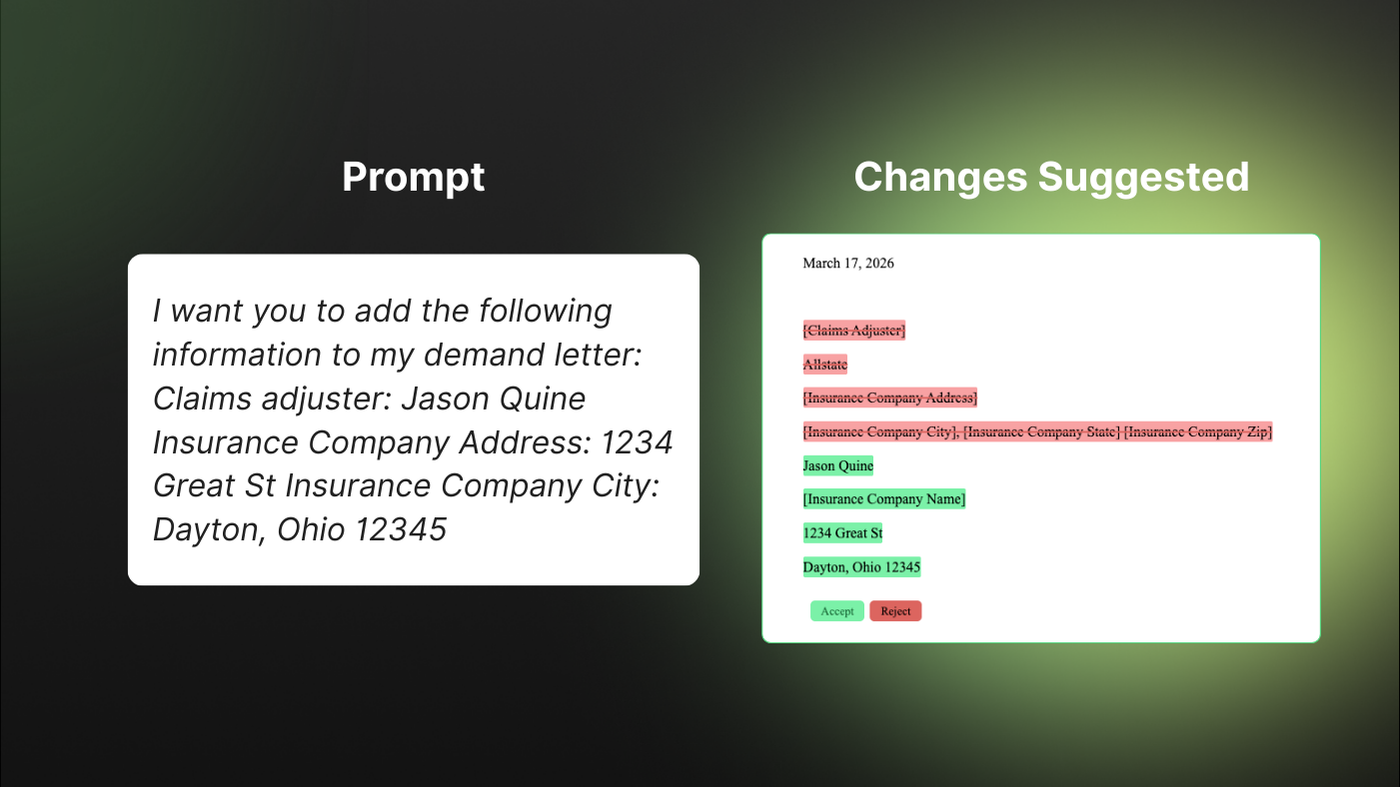
This is a first for ProPlaintiff, and a significant one.
The Demand Letter tool now includes an embedded AI Agent that accepts direct commands and updates your draft in real time. If the introduction feels flat, tell the agent to sharpen it. If a section needs a different tone, give the instruction and watch it adjust.
This isn't an external editing tool you paste text into. It's a live editorial collaborator built directly into the drafting environment, one that understands the full context of the letter you're working on.
For any firm that has ever spent time going back and forth on demand letter language, the Demand Letter Agent represents a meaningful shift in how that work gets done.
ProPlaintiff combines case management, AI-assisted drafting, and intelligent analysis into one platform, so your firm can move faster and win more cases.
Book a Demo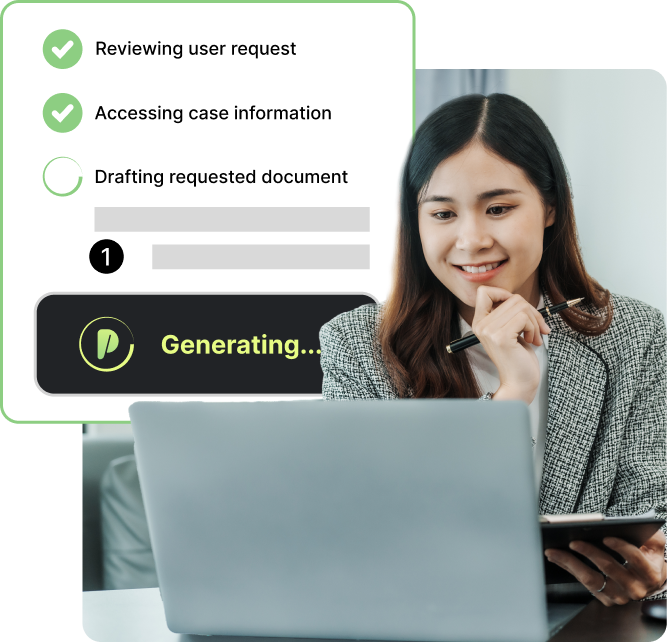
The Case Overview page has been overhauled into a strategic command center for each of your cases.
The headline addition is Case Analysis, a feature that synthesizes the information already on your case to surface a snapshot of where you stand:
Beyond Case Analysis, the Case Overview now includes a tabbed view for cleaner navigation across Timeline, damages, parties, and other case data. Two additional features address a long-standing pain point in case management:
Patches — Every deletion is preserved. If a timeline entry, damage item, or party record gets removed, it's saved automatically. Revert any change with one click.
Smart Merge — When similar timeline entries, damages records, or party records exist across the case, you can now merge them. Select which data to keep and which to omit. No more duplicate cleanup headaches.
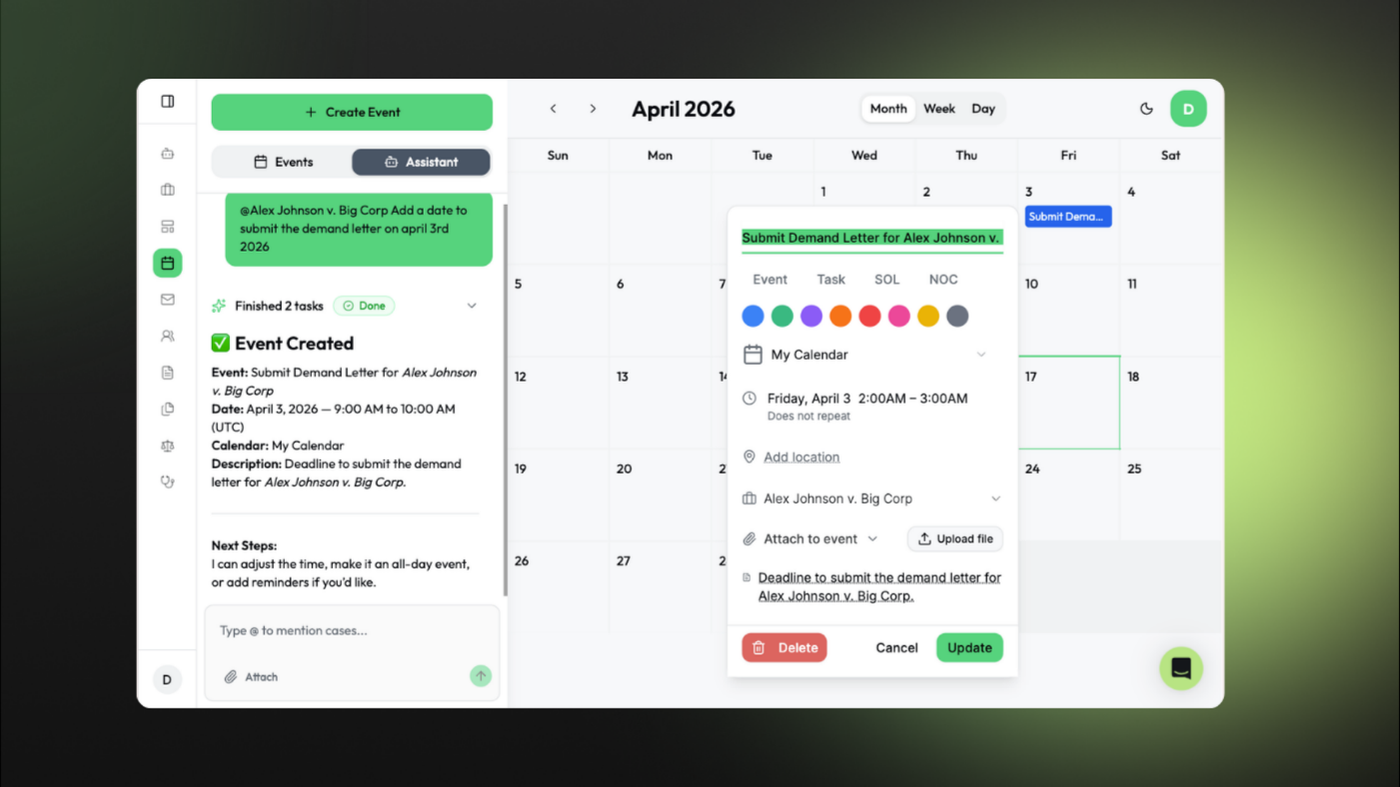
The ProPlaintiff Calendar now has a built-in AI Assistant, and it makes calendar management noticeably faster.
You can chat with the assistant to assign tasks to team members, attach relevant documents to specific calendar events, and coordinate across your organization, all through natural conversation. You can even hand the assistant a PDF full of events or deadlines and instruct it to add them to the appropriate calendar. It handles the rest.
For busy litigation teams managing overlapping deadlines across multiple cases, this kind of conversational scheduling is a real time-saver.
Two major features are currently in development and coming to ProPlaintiff soon:
Agent Orchestrator — This will allow multiple AI agents to work together across your workflow, coordinating tasks that span case management, document generation, and scheduling in a single automated sequence.
Clio Integration — ProPlaintiff will connect directly with Clio, one of the most widely used legal practice management platforms, enabling seamless data sync between the two systems.
This update makes ProPlaintiff the most complete AI legal tool for plaintiff attorneys available today. The AI Paralegal can now handle your entire case setup. The Demand Letter Agent edits on command. Case Analysis gives you strategic intelligence before you walk into a negotiation. And the Calendar AI Assistant makes team coordination effortless.
If you're already a ProPlaintiff user, log in and explore what's new. If you're evaluating AI paralegal software for your firm, this is a good time to take a closer look.



.svg)